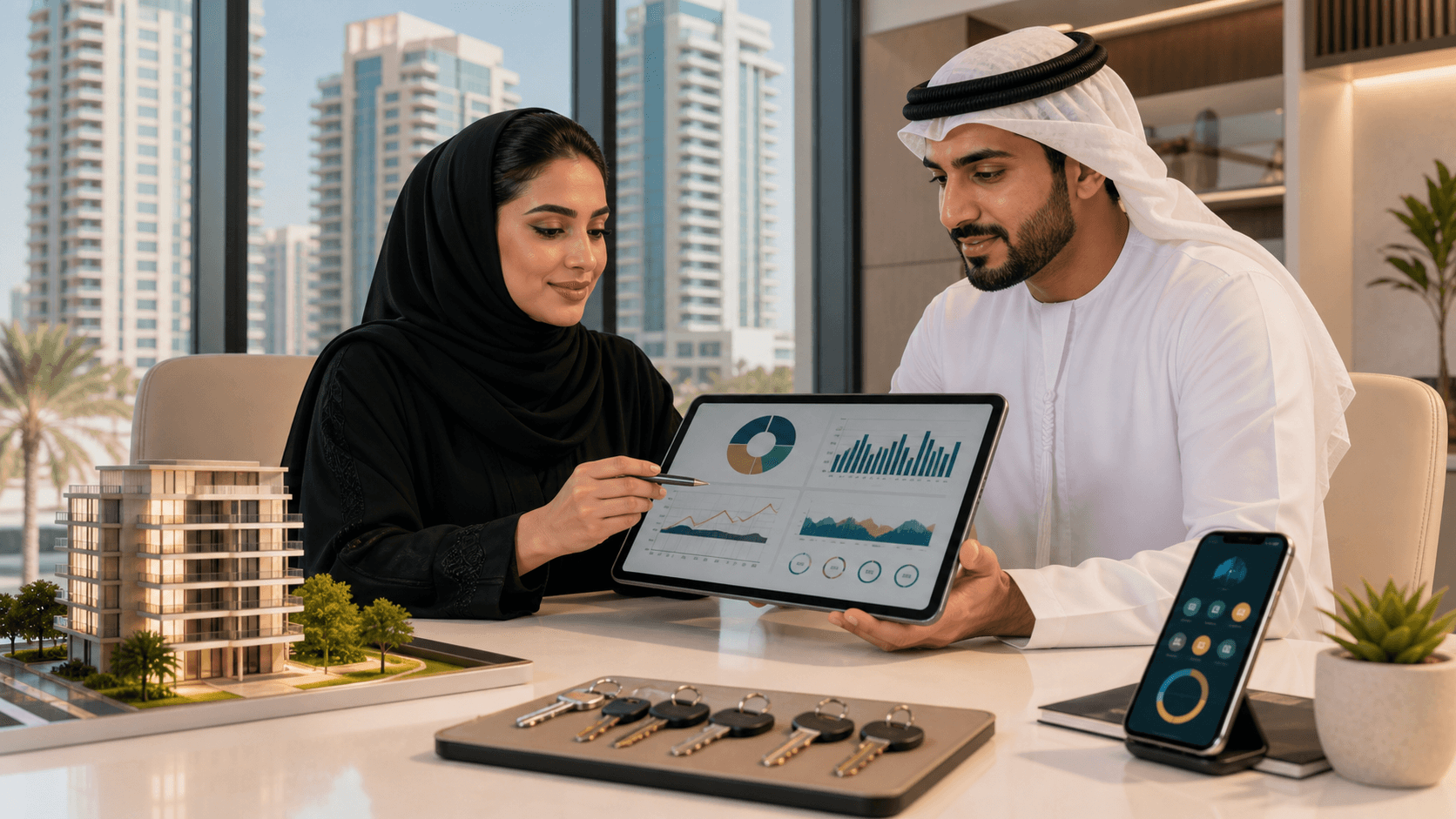
Turning Property Data Into Profits Before Year-End
Managing a growing property portfolio in the UAE can feel like trying to juggle too many balls at once. There are different tenancy rules by emirate, Ejari to think about, transient tenants moving in and out, and owners asking for faster, clearer reports. Add long WhatsApp threads, email chains, and scattered spreadsheets, and small issues can quickly snowball.
The last quarter of the year is when many property managers, brokers, and building owners plan budgets and set growth targets. That makes it the right time to ask a simple question: is our current setup strong enough to support the next stage of growth? A property management ERP built for the UAE can centralise tenant, owner, lease, maintenance, and revenue-sharing data into one place so teams stop chasing information and start acting on it.
In this article, we walk through how to build a practical business case for moving to a property management ERP. We will cover a simple ROI model, a change management plan that keeps your teams onside, and a phased implementation roadmap that fits around the real leasing cycles you deal with every year.
Why UAE Portfolios Outgrow Spreadsheets and Legacy Tools
Spreadsheets and basic tools usually work fine when you manage a small number of units. But once you grow across multiple buildings or work with different owners and brokers, the cracks start to show.
Common UAE pain points include:
- Tenant and owner records scattered across Excel, email, and shared drives
- Manual Ejari-related steps that depend on one or two team members
- Maintenance requests coming in via WhatsApp, calls, and emails, with no clear log
- Revenue-sharing rules tracked in separate sheets that never quite match finance records
Seasonal peaks make this even harder. As more renewals and move-ins hit around the same time, manual systems get stretched. That is when you see:
- Errors in rent invoicing and service charge breakdowns
- Missed or late renewals because no one had a single view of expiries
- Delayed maintenance because work orders were buried in chat threads
- Confusion around payouts to owners and brokers
A modern property management ERP becomes the natural next step once you hit certain triggers, such as:
- Managing 100 or more units
- Handling multiple buildings or mixed-use assets
- Working with several owners under different revenue-sharing setups
At that point, the risk of staying with legacy tools is not just about stress for the team. It is about opportunity cost: slower growth, weaker tenant experiences, and less trust from owners who expect clear, timely information.
Building a UAE-Focused ROI Model for Property Management ERP
A good business case starts with simple, clear numbers. For property management ERP, the first layer is direct cost savings across daily work.
Think about:
- Fewer hours spent drafting, checking, and renewing leases
- Less time chasing late payments and reconciling bank transfers
- Digital maintenance workflows that cut back-and-forth between teams
- Fewer errors in revenue-sharing payouts and owner statements
You can start to track metrics like:
- Hours saved per new lease or renewal
- Days reduced in arrears collection or reminder cycles
- Drop in vacant days between tenants because documents and approvals move faster
The second layer is revenue and value gains. When your whole portfolio runs on a clear system, you can:
- Fill units faster because marketing, viewings, and onboarding follow a consistent flow
- Keep tenants longer through timely maintenance and quick responses
- Give owners cleaner, more frequent reporting so they feel confident to add more units
- Scale your portfolio without always adding more back-office staff
To build a simple ROI model, you can:
- List expected costs, such as implementation and subscription for the ERP.
- Estimate productivity savings from fewer manual hours and fewer mistakes.
- Estimate incremental revenue from better occupancy, stronger retention, and faster collections.
- Work out an expected payback period and look at the value over a three-year horizon.
When the ERP is built with the UAE in mind, those assumptions become more realistic. Workflows around Ejari, local payment habits, and multilingual tenants are already thought through. That lowers the number of custom workarounds and helps your team reach the expected ROI sooner.
Securing Stakeholder Buy-in and Managing Change
A property management ERP project is not just an IT decision. It touches almost every team that deals with tenants, owners, or buildings.
Key groups inside a real estate business usually include:
- Property managers, who care about clear views of occupancy, renewals, and issues
- Back-office finance teams, who want accurate collections and payouts
- Leasing agents and brokers, who need faster onboarding and fewer admin delays
- Facilities and maintenance teams, who want clear work orders and priorities
- Owners and investors, who expect simple, timely, and trustworthy reporting
A simple change management plan can keep these groups aligned:
- Run early interviews to map a normal working day for each role
- Capture specific pain points, such as double entry or missing data
- Co-create new workflows with team leads, so the system matches real work
- Nominate system champions in each department to answer questions on the ground
There will be worries. Some people may feel unsure about job security, others may be nervous about new dashboards or data migration issues. To handle this, it helps to plan:
- Phased rollouts instead of switching everything at once
- Parallel runs for a short time during busy seasons, so people can compare outputs
- Clear KPIs for the first 60 to 90 days, such as fewer invoice disputes, faster work order closure, or less time spent collecting documents
When teams can see quick wins in their daily work, resistance usually softens, and the new ERP becomes part of normal operations rather than a one-off project.
Designing a Phased Implementation Roadmap for Q4 and Beyond
A successful move to property management ERP is all about timing and clear phases. The final quarter of the year often works well, because budgets are being set and many portfolios are preparing for the next active leasing period.
A simple roadmap might look like this:
- Phase 1: Requirements and vendor comparison
- Define the must-haves, such as lease management, maintenance, and revenue-sharing
- Involve property, finance, and maintenance teams in short workshops
- Phase 2: Data audit and migration strategy
- Review where tenant, owner, lease, and revenue rules currently live
- Clean and standardise records before importing them into the new system
- Phase 3: Process redesign
- Map new workflows for collections, renewals, and maintenance
- Agree clear roles and approvals inside the ERP
- Phase 4: Pilot launch
- Start with one building or a smaller cluster of units
- Train users, collect feedback, and adjust settings
- Phase 5: Scale-up and continuous improvement
- Roll out across the wider portfolio in waves
- Keep reviewing KPIs and fine-tuning reports and automations
Success depends on a few enablers: visible support from leadership, clear ownership of the project, practical training plans for front-line teams, and a short list of go-live KPIs. These might include collection cycle time, tenant response times, and owner statement accuracy. With UAE-focused support and lessons from similar portfolios, an ERP project can move from idea to daily reality without disrupting your next leasing season.
Turning Your Business Case Into a Growth Engine
When you combine a clear ROI model, a thoughtful change plan, and a phased roadmap, a property management ERP stops being an abstract IT upgrade. It becomes a way to turn scattered data into a structured growth engine for your portfolio.
This is the right budgeting window to pause and quantify where the pain really sits. Pick your top three problems, link each one to financial impact, and then match them to ERP capabilities like centralised lease data, automated maintenance flows, or transparent revenue-sharing. A UAE-focused platform such as Bayti Living is built around these exact needs for property managers, brokers, and building owners in this market, so the hard work you put into the business case can translate into real, measurable gains when you go live.
Streamline Your Property Operations With Smart Automation
If you are ready to reduce manual work and keep every unit, lease, and payment organized in one place, our team at Bayti Living can help you move to a more efficient workflow. Start centralizing your portfolio, automating routine tasks, and gaining real-time visibility into your performance with our tailored property management ERP. We will guide you through setup, data migration, and onboarding so your team can adopt the system quickly. Reach out today to see how this approach can improve control, accuracy, and profitability across your properties.